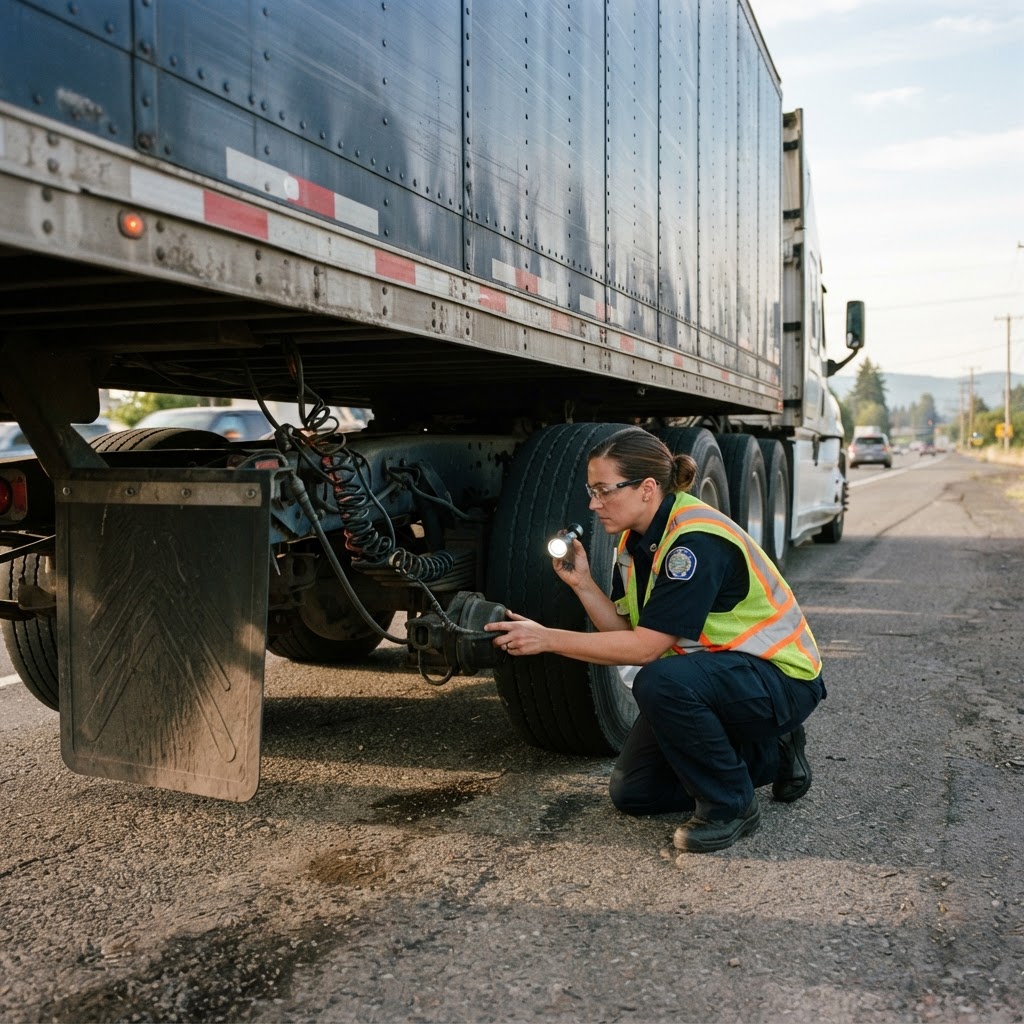
Fleet managers who rely entirely on driver-reported defects are operating on a foundation that FMCSA violation data consistently undermines. In the most recent FMCSA Large Truck Crash Causation study, brake-related violations accounted for approximately 29% of all out-of-service orders issued during roadside inspections — the majority of which involved defects that existed before the trip began. The driver signed the DVIR. The truck rolled anyway.
This isn't a training problem. It's a data architecture problem. The solution isn't more driver coaching. It's building a pre-trip inspection program that uses telematics to independently validate what drivers report — or fail to report — before a unit leaves the yard.
Why Driver-Only DVIRs Fail at Scale
The DVIR requirement under 49 CFR §396.11 is structurally sound: drivers must inspect a defined list of components and report defects before operating the vehicle. In practice, the system has two failure modes.
The first is honest omission. Drivers with 600+ miles ahead of them frequently miss early-stage defects — a slight brake pull at cold ambient temperatures, an intermittent ABS fault that clears before the walkaround begins, a coolant overflow that happened overnight and already reseated. These aren't negligent drivers. They're human beings doing a visual inspection on equipment they've operated for weeks without incident.
The second is documented non-compliance. ATA's Technology & Maintenance Council data consistently shows that between 15% and 22% of DVIRs submitted across mixed-use fleets contain no defect entries despite active fault codes present in the ECM at dispatch time. Whether that's intentional or inattentive is operationally irrelevant — the liability exposure is identical.
When a truck goes out-of-service on I-81 with a SPN 521049 / FMI 5 (indicating an open circuit on an ABS wheel speed sensor) and the DVIR shows